Hotel Housekeeping Checklist: The Sequence Matters
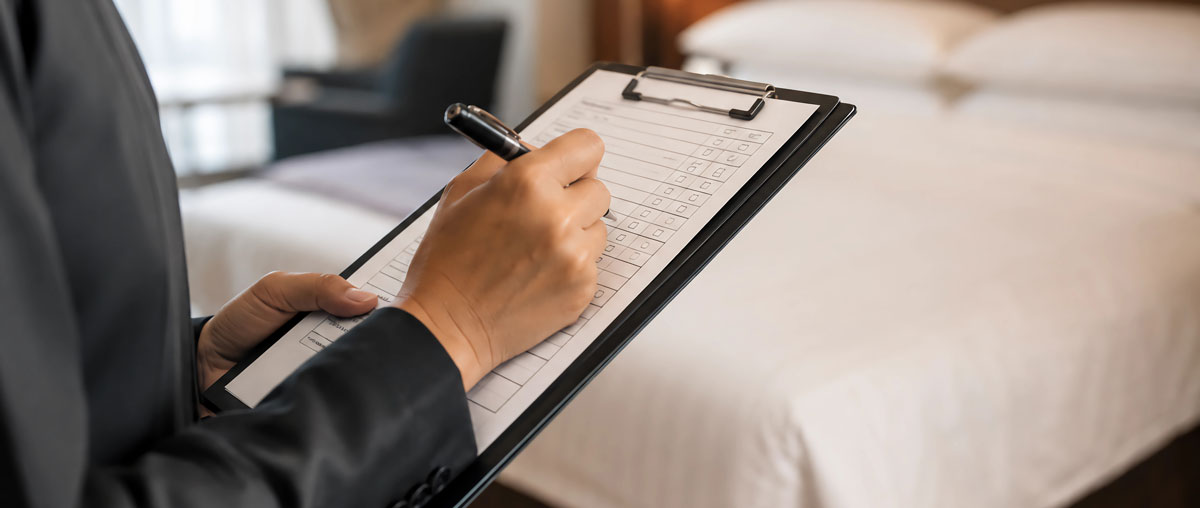
The best hotel housekeepers will tell you there’s a science to their work. Doing the right tasks in the wrong order leads to cross-contamination, dirtying surfaces they just cleaned, and wasting time on rework.
When a guest opens the door for the first time, they expect a hotel room that looks and smells clean. They expect fully-stocked amenities, shining bathroom fixtures, and not a speck of dust in sight.
In a hotel without standardized housekeeping SOPs, opening that door becomes a gamble. What the guest sees inside can vary widely depending on which team member cleaned the room and how much time they had to do it. And that directly impacts the total guest experience.
In this guide, we’ll cover:
- How to clean for a consistent and efficient room turn
- The right sequence of cleaning tasks — and why it matters
- How vacant rooms, still-occupied rooms, and full turns need to be cleaned differently
- Recommended supplies
You’ll also find a downloadable PDF checklist you can share with your team and post in the staff room and on cleaning carts as a reminder.
How Housekeeping Affects Hotel Revenue
Inconsistent housekeeping doesn’t just affect the guests you have. It impacts your ability to draw future guests, and even how much you can charge them.
When a guest finds hair in the drain, sticky fingerprints on the remote, or a bitter odor in the coffee maker, they don’t see evidence of a rushed housekeeper. They see evidence of a poorly run property that doesn’t care about guest experience. And they don’t keep that opinion to themselves. Unhappy guests are statistically more likely to leave online reviews than satisfied guests.
Those reviews matter more than you might think. When planning a trip, 95% of travelers read online reviews before booking a hotel. The better your reputation, the higher your bookings — and the stronger your pricing power. Cornell University found a hotel that loses one star in its online ratings has to drop prices by about 11% just to maintain the same level of occupancy.
With cleanliness consistently rated as one of the most important predictors of guest satisfaction, housekeeping SOPs are more than an operations practice. They’re revenue protection.
Step Zero: Before Entering the Room
Hotel housekeeping starts in the hall. A housekeeper who enters without the right supplies and the right room information is already wasting time.
START WITH A CART. Before beginning rounds, the housekeeping team stocks the cart with all the required supplies for full room turns. Each trip back for something they forgot slows down efficiency.
VERIFY ROOM STATUS. Housekeepers don’t enter a room without knowing in advance whether it’s occupied. They need to know if the guest has already checked out or is a late checkout; if it’s a stayover; and if the guest has VIP status.
They also need to be aware if there is a pet staying in the room, if the guest requested disability accommodations or declined housekeeping service, and whether the guest requested Do Not Disturb.
ALWAYS KNOCK. Even if all the records indicate the room should be empty, housekeepers knock and announce themselves every time. Mistakenly entering a room with a guest still in it can create guest experience issues and possibly liability.
LOOK AROUND. Once given the all-clear to enter, the housekeeper props open the door, puts on a fresh pair of gloves, and looks the room over. Before touching anything, they document any immediately apparent damage, missing items, or maintenance issues.
The Hotel Housekeeping SOP for Full Room Turns
The SOP for hotel housekeeping is deliberately sequenced to keep teams moving efficiently, to prevent cross-contamination, and to give cleaning products time to work. It’s not just a list of what to do; it’s a rhythm for how to do it.
The following SOP is intended for full room turns. When a room is occupied by a guest staying over, it should be shortened to respect privacy standards. Do not open drawers, bags, luggage, or personal containers in an occupied room, and do not move guest belongings unless absolutely necessary.
-
Strip and Assess
- Remove dirty linens, trash, and used single-use amenities first. This gets dirty items out of the room so they can’t contaminate surfaces that have been cleaned.
- Check drawers, closets, and surfaces for items a checked-out guest may have left behind. Found items should be bagged, labeled with the room number and date, and turned into lost and found according to hotel policy.
- Document any damage or maintenance issues.
-
Apply Bathroom Cleaners
- Apply cleaners or EPA-registered disinfectants to the toilet, sink, countertop, tub, and shower. Do not wipe them off immediately.
This is one of the most important parts of the sequence. Applying disinfectants early, then allowing them to sit while the rest of the room is cleaned, provides the products the time they need to do their job. -
Make the Bed
- Apply fresh linens according to the property standard. The bed is the first thing guests look at when they enter the room, so follow consistent standards for its presentation.
Shaking out linens to make the bed can release dust and fibers. Making the bed before dusting gives debris time to settle so it can be captured in the next step. -
Dust and Wipe Hard Surfaces
- Move around the room in a single direction, cleaning the entire section from top to bottom before moving on. This prevents wasting time backtracking and makes sure all debris falls to the floor and not to surfaces that have already been cleaned.
- Wipe high-touch hard surfaces like door handles, light switches, thermostat, remote control, and phone with the appropriate disinfecting cleaner.
- Clean the coffee maker according to the property’s coffee station SOP.
-
Clean the Bathroom
- Because of contamination risk, cloths and cleaning tools used in the bathroom cannot be used anywhere else in the room. Within the bathroom, use separate cloths for the toilet, glass and mirrors, and general surfaces.
- If the bathroom cleaners applied in Step 2 have met the manufacturer’s recommended dwell time, scrub all bathroom surfaces and wipe dry.
- Clean the mirror with glass cleaner and a fresh cloth.
- Supply fresh towels and toiletries per the property standard.
- Wipe the bathroom floor, moving backwards toward the door so there is no tracking over the clean floor.
-
Restock Amenities
- Restock refreshments, coffee station supplies, tissues, pens, and any other in-room amenities. This step is near the end to ensure clean amenities are not placed on dirty surfaces.
- Confirm remote controls are accounted for.
-
Clean Floors
- Before cleaning floors, look under furniture such as beds to confirm no items were lost.
- Mop hard floors, working toward the door.
- Vacuum in a single directional pass, working toward the door.
This step comes last so it captures all the dust and debris dislodged in the earlier steps. Moving in one direction, toward the door, prevents backtracking over clean floors.
-
Final Inspection
- From the door, give the room one last look from the guest’s perspective. Carefully scan the room for anything messy, dirty, or out of place, and take note of any odors or maintenance issues.
- Close the door securely and update the room status according to property procedure.

The Hotel Housekeeping SOP for Occupied Rooms
When a hotel guest is staying over, housekeeping SOP changes. The housekeeper balances the guest’s privacy with their comfort and addresses the highest-priority cleaning tasks.
-
Confirm Service is Authorized
- Follow protocols for Do Not Disturb, housekeeping opt-in/opt-out, privacy, and security.
- Respect guest privacy. Do not open drawers, closets, or cabinets. Do not open guest luggage, bags, or containers. Do not touch or move guest belongings unless it is truly necessary.
-
Apply Bathroom Cleaners
- Apply bathroom cleaners and allow them to sit on surfaces. This step moves up in the sequence because of the shortened time.
-
Remove Dirty Items
- Remove trash, used towels, and used amenities. Leave fresh towels and amenities if needed or if requested by the guest.
-
Make the Bed
- Do not strip the bed unless it is visibly soiled or the guest requested it. Tidy the existing linens, unless the guest has left belongings strewn on the bed.
- For extended stays, follow property policy for how many nights to go between bed linen changes.
-
Wipe Down High-Touch Surfaces
- Wipe down light switches, door handles, remote controls, and other high-touch surfaces with the appropriate cleaner.
-
Clean and Restock the Coffee Station
- Follow coffee station cleaning SOPs to clean and restock the coffee station.
-
Clean the Bathroom
- Return to the bathroom to scrub surfaces, using separate cloths for the toilet, glass and mirrors, and general surfaces.
The Hotel Housekeeping SOP for Vacant Rooms
When a room hasn’t been occupied for several days in a row, it needs a housekeeping refresh. This light cleaning keeps dust and odors at bay, prevents guests from being accidentally given expired amenities, and keeps maintenance issues from worsening before they’re discovered.
-
Dust Hard Surfaces
- Dust the room from top to bottom, moving in one direction and finishing one section before moving on to the next.
-
Perform Coffee Station Maintenance
- If the property’s coffee station SOPs call for it, run a water-only cycle in the coffee maker or flush the reservoir.
- Check coffee, tea, condiment, and refreshment packets to ensure they’re not expired.
-
Check for Expired Amenities
- Check toiletries and other perishable amenities for expiration.
-
Check for Maintenance Issues
- Extended vacancies are when hidden maintenance issues like leaks, mold, or cracked plaster become problems. Check for any issues that need to be fixed before the next guest arrives.
Cleaning Supplies to Have on Hand
Standardizing the supply kit simplifies training, reduces variation, and streamlines procurement. Supplies should be checked before rounds begin so the housekeeping team doesn’t lose time running back to the closet in the middle of a turn.
Cart Supplies
- All-purpose cleaner
- Disinfectant spray cleaner
- Glass cleaner
- Toilet bowl cleaner
- Odor neutralizer
- Wet-floor signage
- Furniture polish
- Trash bags
- Carpet spot treatment
- Replacement amenity bags, if in the property standard
Per-Room Supplies
- Disposable gloves, one set per room
- Additional PPE as required by product labels and property policy, such as eye protection or masks when needed
- Toilet scrubbing brush
- Color-coded or task-dedicated microfiber cloths, minimum 4 per room: 1 for toilet areas, 1 for bathroom surfaces, 1 for glass and mirrors, and 1 for guestroom surfaces
- Fresh linens and towels per room standard
- Single-use guest amenities
- Coffee station supplies
Your Checklist is Only As Good As Your Training
This checklist is a strong start to establishing your property’s housekeeping SOPs. But it’s not enough to hand it around and trust your team to follow it.
SOPs are effective only when they’re backed by clear training, consistent supervision, and accountability. Teaching your team the reason behind each step, and the reason it falls where it does in the sequence, makes them more likely to follow the process consistently.
Let your team know you’re not trying to micromanage or to make their jobs more complicated. The goal is to help them move faster, avoid mistakes, and deliver the clean, consistent experience that keeps guests coming back.
Ready to develop your property’s standard housekeeping supply kit? Contact Courtesy Products today.